Our Story
The Problem We Are Solving
Across Uganda, too many children are still moving through school without mastering the foundational skill that unlocks all other learning: reading. National evidence shows progress in access to education, but foundational literacy remains far too weak for many learners. The 2024 National Population and Housing Census reports a national literacy rate of about 74 percent, meaning a substantial share of Ugandans still lack basic literacy skills, even as Uganda remains a very young country with heavy pressure on the school system.
"Reading is the gateway skill—without it, every other subject becomes harder."
This is not only a learner problem; it is a system problem. Many schools still lack the conditions needed for consistent early grade reading instruction: enough teaching and learning materials, sustained teacher support, and system-wide commitment to foundational literacy. When foundational reading is weak, children struggle in every subject because they cannot access written instruction, complete independent tasks, or understand grade-level texts. Unaddressed progression through school masks deep learning gaps.
The challenge is even sharper in communities that have faced long periods of disruption. Northern Uganda remains an important example of how conflict can reset education systems for a generation. Years of insecurity and displacement severely weakened teacher availability and damaged learning environments. Recovery requires more than reopening schools. It requires structured teaching, rigorous follow-up, and localized measurement.
Evidence-led Action
Uganda's own early grade reading evidence shows why structured support matters. Practical fluency benchmarks (20, 40, and 60 correct words per minute) track whether learners are moving from basic decoding into stronger reading fluency. Our data proves that when schools receive structured reading support, learners predictably transition into stronger fluency bands.
The deeper problem is the absence of a strong, connected literacy improvement system that can perform five pivotal sequences: identify where learners are struggling, support teachers, follow up in classrooms, verify results, and direct resources dynamically.
Our Connected Solution
Ozeki's solution is built on a simple conviction: Uganda's literacy challenge will not be solved by isolated activities. It will be solved by a connected system. That is the purpose of the National Literacy Intelligence Platform (NLIP).
The Evidence-Driven Improvement Cycle
At its core, the solution works through a clear improvement loop: schools are not left with knowledge alone; they are heavily supported until foundational reading instruction permanently transforms learner outcomes.
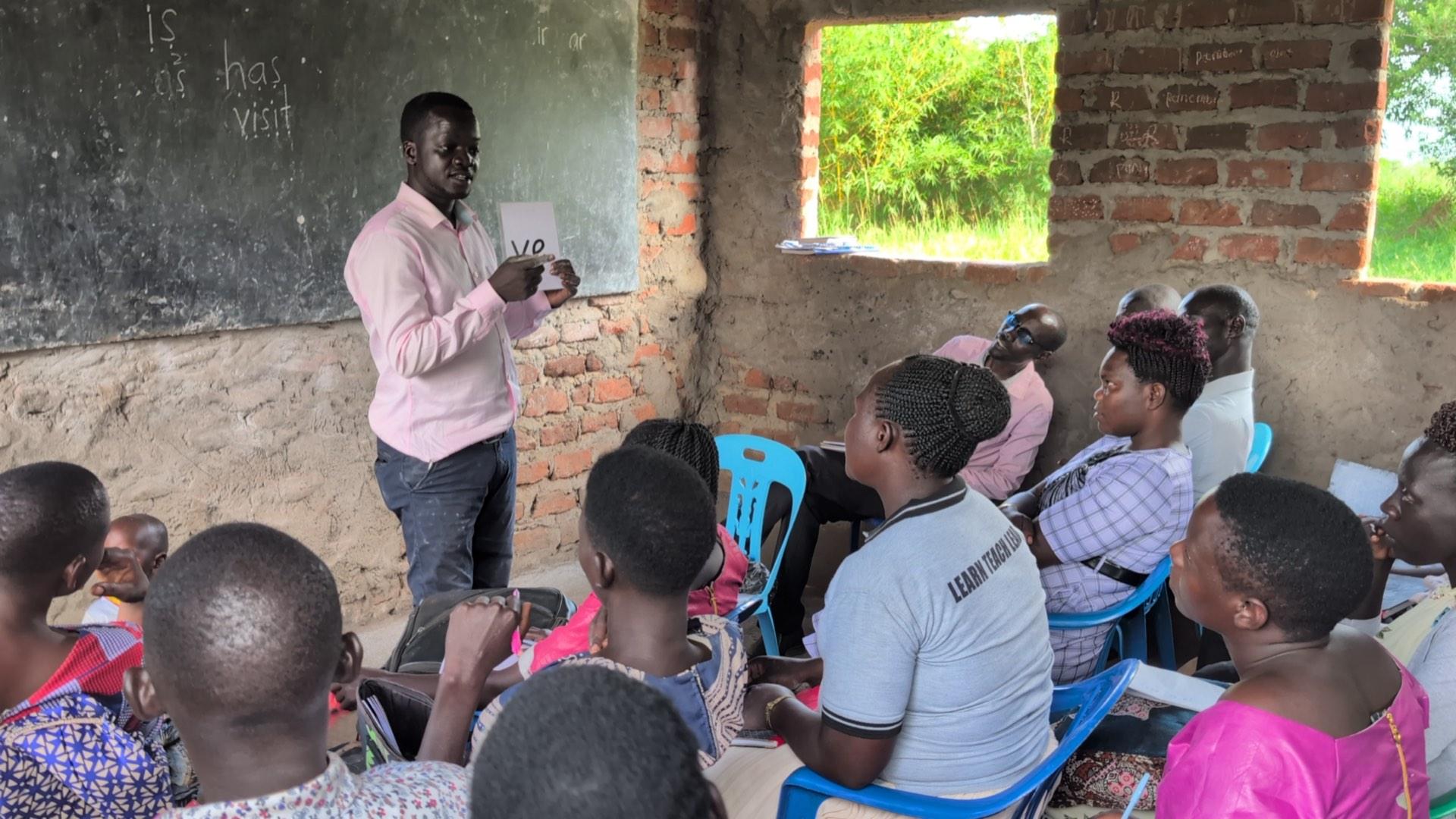
The first step is practical, demonstration-based teacher training in structured phonics. Teachers are equipped to teach reading step by step. Ozeki coaches then routinely visit schools to observe real lessons, provide immediate feedback, model routines, and support teachers through structured coaching cycles.
As learner assessments accumulate in our platform, it automatically translates raw scores into clear reading levels and domain profiles. NLIP instantly triggers remedial actions for weak performance zones or scales back intervention for rapidly graduating classrooms.
NLIP makes all of this unconditionally accountable. It produces live district and national impact reports that consolidate training data, coaching evidence, learner outcomes, and reading progression into actionable intelligence for global partners.
From evidence to national progress
Explore verified outcomes, implementation trends, and program pathways operating across Uganda.